Seoul Subway Signs in Korean: 10 Words to Read Before Your Trip
Exit, entrance, restroom, transfer: the 10 Korean signs you'll see everywhere in Seoul, with romanization and an easy way to read each one.
Hi, I'm Emma! When I worked as a guide in Seoul, I taught Hangul to people who had just landed in Korea. Most of them told me the same thing: the scariest part wasn't the language. It was standing in a busy station, not knowing which way to go.
The good news? Seoul's subway has English signs on the main lines. But inside buildings, at smaller stations and on the street, you'll often see Hangul first, or only Hangul. Learn these 10 words and you'll feel at home much faster.
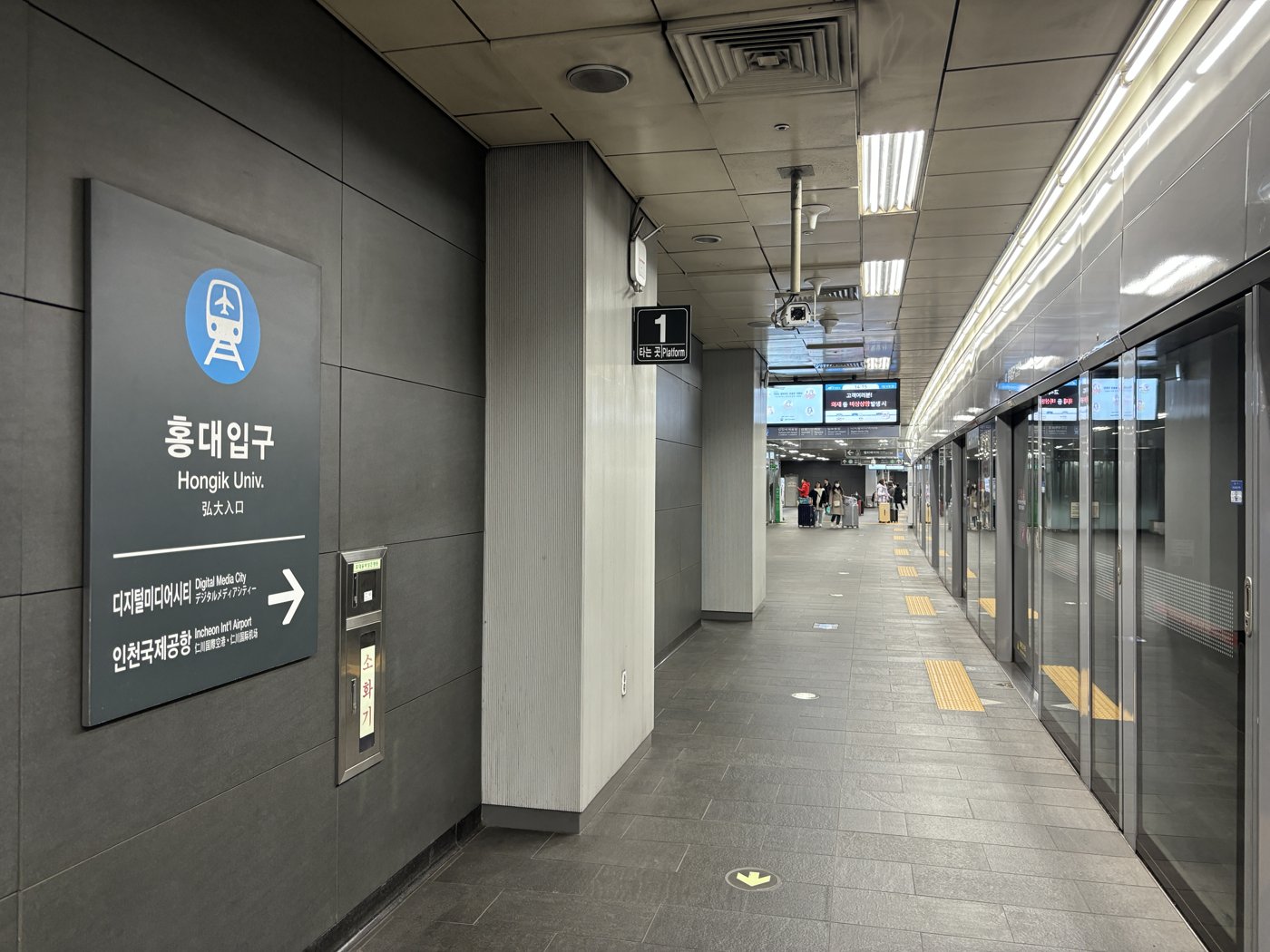
Quick test: can you read this sign?
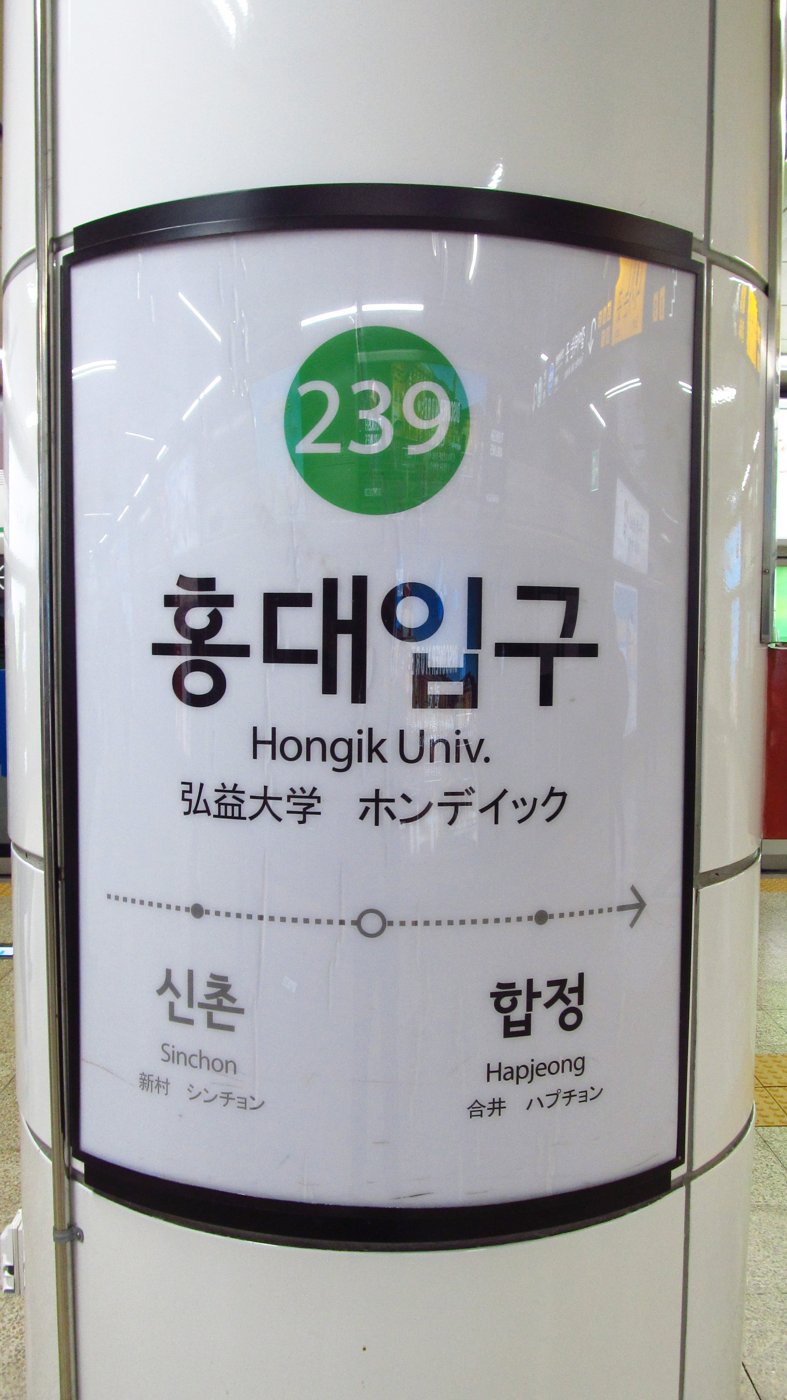
Show the answer
홍대입구 (Hongdae Ipgu): "Hongik University Entrance". 홍대 is short for Hongik University, and 입구 means entrance. You'll learn 입구 in the list below. The two names at the bottom, 신촌 (Sinchon) and 합정 (Hapjeong), are the next stations in each direction.
The 10 signs
| Sign | Romanization | Meaning |
|---|---|---|
| 출구 | chulgu | exit |
| 입구 | ipgu | entrance |
| 화장실 | hwajangsil | restroom |
| 지하철 | jihacheol | subway |
| 택시 | taeksi | taxi |
| 공항 | gonghang | airport |
| 병원 | byeongwon | hospital |
| 약국 | yakguk | pharmacy |
| 편의점 | pyeonuijeom | convenience store |
| 은행 | eunhaeng | bank |
Why so many station names end in 입구
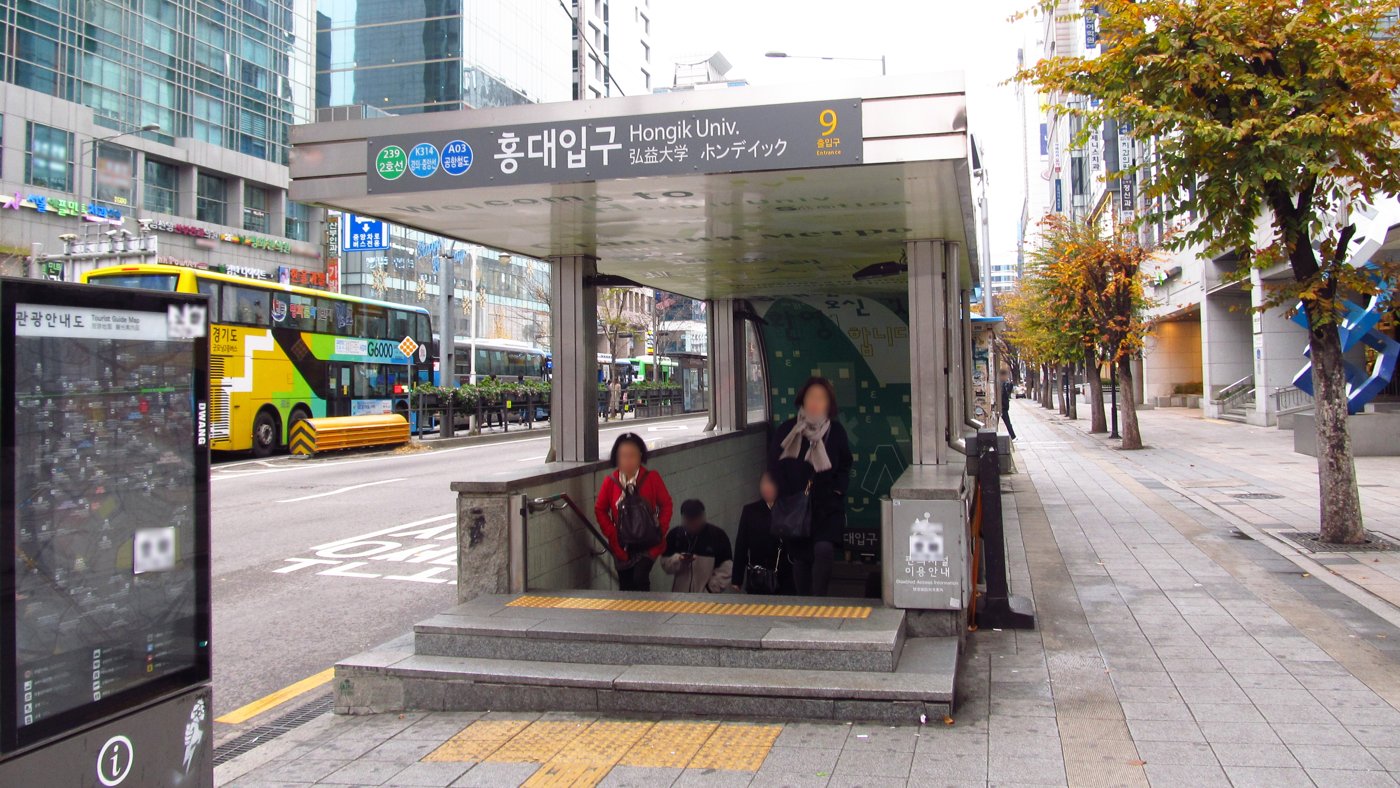
This confuses almost everyone at first. 입구 means entrance, so a station called 홍대입구 isn't telling you where to go in. It's the station at the entrance to Hongik University. You'll see the same pattern all over Seoul:
| Station | Means |
|---|---|
| 홍대입구 | Hongik University entrance |
| 건대입구 | Konkuk University entrance |
| 서울대입구 | Seoul National University entrance |
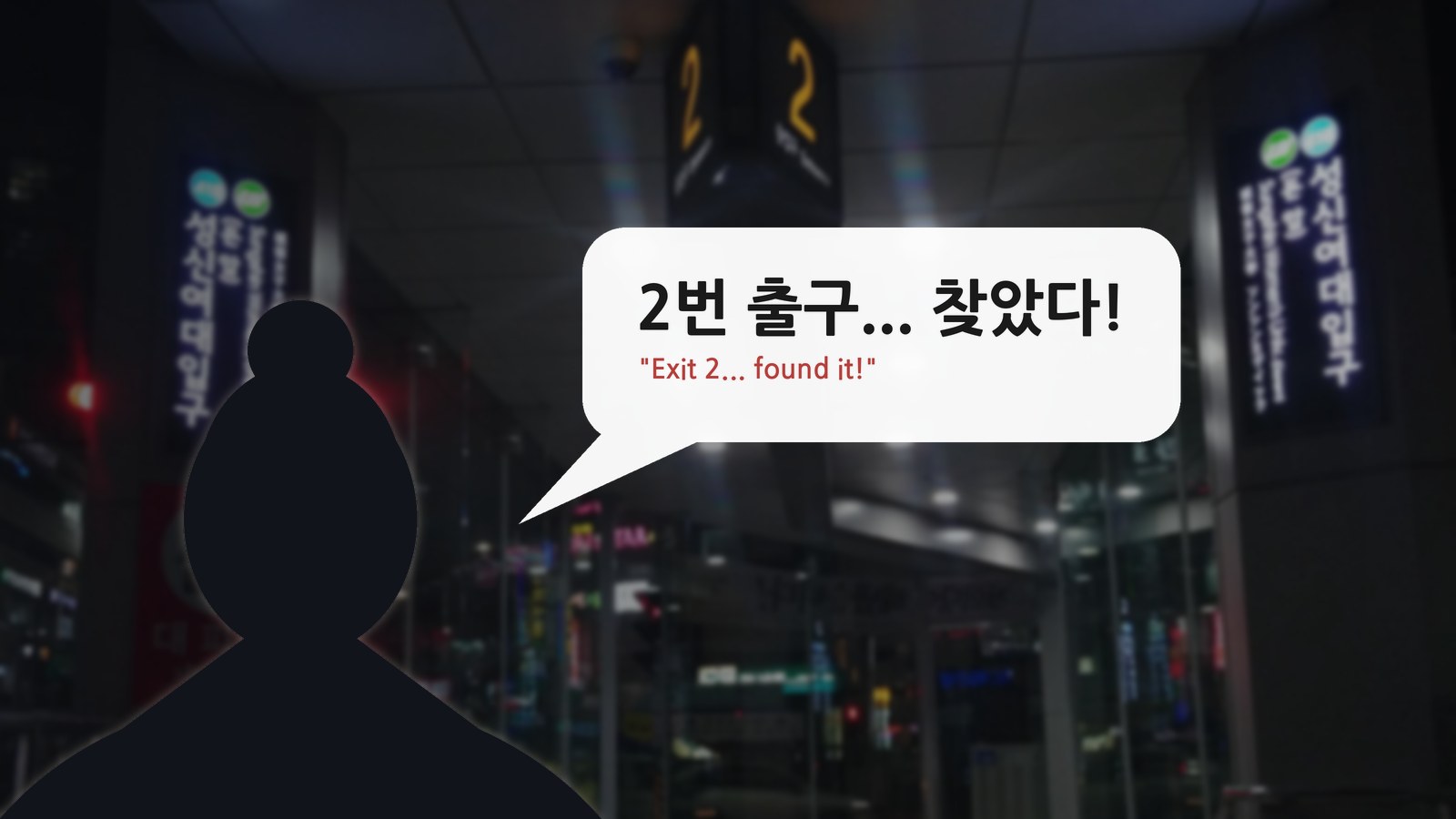
| 성신여대입구 | Sungshin Women's University entrance |
So when you want to get out, ignore 입구 and look for 출구.
How to actually read them (not just memorize)
Korean letters stack into syllable blocks. Each block is one sound. Take 출구 (exit):
- 출 = ㅊ (ch) + ㅜ (u) + ㄹ (l) → chul
- 구 = ㄱ (g) + ㅜ (u) → gu
Once you can break a block into letters, you can read any sign, even ones that aren't on this list.
3 mistakes first-timers make
- Following 입구 to get out. In station names it means "entrance to a place", not your way out. Look for 출구.
- Ignoring the exit number. Big stations have many exits, and the wrong one can leave you a long walk from where you need to be. Check the exit number in your map app before you go up.
- Missing the direction. On the platform you'll see 방면 (bangmyeon), which means "toward". 신촌 방면 means the train is going toward Sinchon.
Say it: ask which exit
몇 번 출구예요?
myeot beon chulgu-yeyo? "Which exit number is it?"
화장실 어디예요?
hwajangsil eodi-yeyo? "Where is the restroom?"
The first player is natural speed, the second is slow.
Two bonus words for the subway
- 환승 (hwanseung): transfer. Follow it when you change lines.
- 타는 곳 (taneun got): where to board. You'll see it near the platforms.
Why this sticks better than a phrasebook
A phrasebook gives you words to memorize. Reading gives you a key. Research on language learning shows we remember far better when we:
- Decode instead of copy. Sounding out 출구 letter by letter builds a memory you can reuse for every new word.
- Practice a little, often. Ten minutes a day for a week beats one long cram session.
- Use it right away. Reading a real sign on your first day in Seoul turns a lesson into a memory.
Mini quiz
1. You need the restroom. Which sign do you follow: 화장실 or 지하철?
화장실 (hwajangsil) is the restroom. 지하철 (jihacheol) is the subway.
2. What does 3번 출구 mean?
Exit 3. 번 means number, 출구 means exit.
3. You need medicine. Do you look for 약국 or 은행?
약국 (yakguk) is a pharmacy. 은행 (eunhaeng) is a bank.
That's exactly how my 7-day workbook is built: a few letters each day, real words every day, and real-world missions at the end.
Free download
The Seoul Cheat Sheet
Ten signs, eight cafe words and six travel phrases on two printable pages.
Get the free PDFFrom the author
Learn to Read Korean in 7 Days
A printable, step-by-step workbook that takes you from your very first letter to reading a real cafe menu and Seoul signs. Numbered stroke order, a memory trick for every letter, and real words from Day 1.
See the workbookEmma is a Korean-American who grew up in the US and now lives in Seoul. A marketer by trade, she spent years guiding first-time visitors around Korea and teaching them to read Hangul.