How to Say Thank You in Korean (and Which One to Use When)
감사합니다, 고맙습니다, 고마워요 or 고마워? Here's the difference, who to say each one to, and audio so you can say it right.

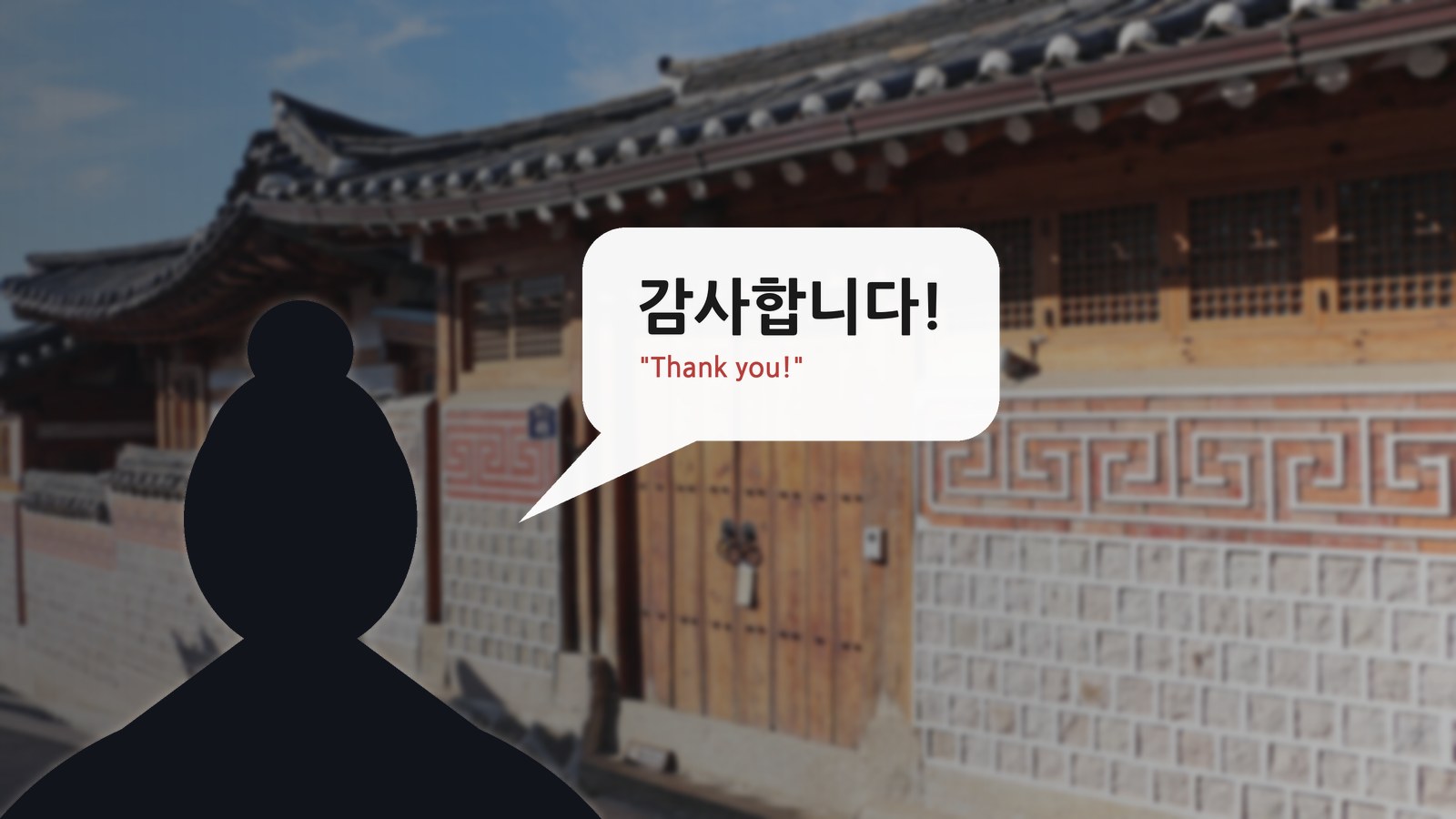
If you learn only one Korean word before your trip, make it this one. You'll say it to the cafe staff, the taxi driver, the person who points you to the right exit. And the reaction when a visitor says it naturally is always the same: a surprised smile.
The tricky part is that Korean has several ways to say thank you. Here's the short version I give friends.
The 4 you'll actually hear
| Korean | Romanization | Use it with |
|---|---|---|
| 감사합니다 | gam-sa-ham-ni-da | anyone. Shops, taxis, strangers, older people |
| 고맙습니다 | go-map-seum-ni-da | anyone. Just as polite, a little warmer |
| 고마워요 | go-ma-wo-yo | people you've met, around your age |
| 고마워 | go-ma-wo | close friends only |
If you're not sure, say 감사합니다. It's never wrong.
감사합니다.
gam-sa-ham-ni-da "Thank you." (polite, safe everywhere)
고맙습니다.
go-map-seum-ni-da "Thank you." (polite, warm)
고마워요.
go-ma-wo-yo "Thanks." (friendly)
고마워.
go-ma-wo "Thanks!" (close friends)
감사합니다 vs 고맙습니다: what's the difference?
Almost nothing in everyday life. 감사 comes from Chinese characters, while 고맙다 is a native Korean word, so some people feel 고맙습니다 sounds a bit softer and more heartfelt. In a shop, both are perfect. Pick the one that's easier for you to say.
What you'll hear back
| Korean | Romanization | Meaning |
|---|---|---|
| 아니에요 | a-ni-e-yo | "Not at all." The most common reply |
| 네 | ne | "Yes." Shop staff often just say this |
| 천만에요 | cheon-man-e-yo | "You're welcome." In textbooks, rare in real life |
아니에요.
a-ni-e-yo "Not at all."
Heard it in a K-drama?
When the lead says 고마워 to someone, it tells you they're close. Switching from 고마워요 to 고마워 is a classic drama moment: it means the relationship just got closer. Now you'll catch it every time.
Two bonus thank-yous for meals
- 잘 먹겠습니다 (jal meok-get-seum-ni-da): said before eating when someone treats you. "I'll eat well."
- 잘 먹었습니다 (jal meo-geot-seum-ni-da): said after the meal, or to the restaurant staff as you leave. "I ate well."
Say the second one on your way out of a small restaurant and watch the owner light up.
Mini quiz
1. A stranger helps you find your subway exit. What do you say?
감사합니다 or 고맙습니다. Both are polite.
2. Your Korean friend your age buys you a coffee. Which is fine?
고마워요, or 고마워 if you're already close.
3. Someone says 감사합니다 to you. How do you reply?
아니에요 (a-ni-e-yo), "not at all."
Saying it is good. Reading it is better.
Once you can read Hangul, you'll see 감사합니다 on receipts, shop doors and bus screens all over Korea. My 7-day workbook takes you from your first letter to reading words like this one on your own.
Want more phrases for your first day? Here's what to say at the convenience store.
Free download
The Seoul Cheat Sheet
Ten signs, eight cafe words and six travel phrases on two printable pages. Tell me where to send it.
From the author
Learn to Read Korean in 7 Days
A printable, step-by-step workbook that takes you from your very first letter to reading a real cafe menu and Seoul signs. Numbered stroke order, a memory trick for every letter, and real words from Day 1.
See the workbookEmma is a Korean-American who grew up in the US and now lives in Seoul. A marketer by trade, she spent years guiding first-time visitors around Korea and teaching them to read Hangul.