How to Use a T-money Card in Seoul (and the Korean You'll See at the Gate)
Where to buy a T-money card, how to top it up, and the Korean words on every subway gate and reload machine, with audio so you can say it yourself.
The first thing I hand every friend who visits Seoul is a T-money card. One little card gets you on the subway, the bus and even most taxis. The card itself is easy. What trips people up is the Korean on the machines. So let's read it together.
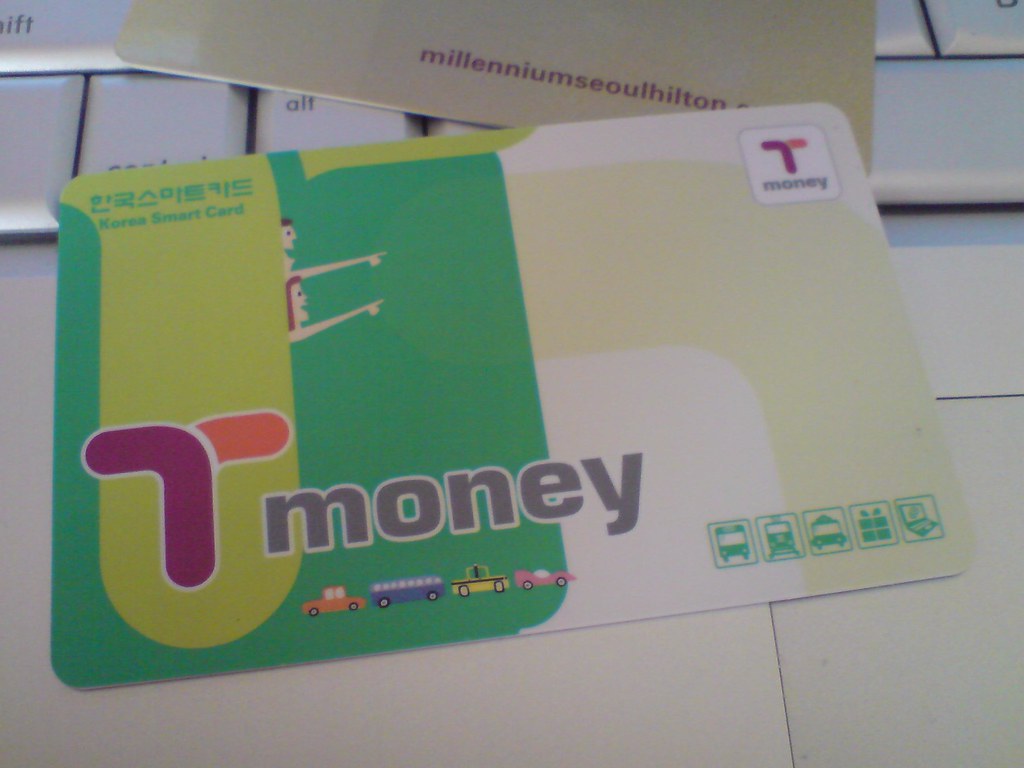
Where to buy one
- Convenience stores: GS25, CU, 7-Eleven and emart24 all sell T-money cards at the counter. The card usually costs a few thousand won, and it starts with a balance of zero.
- At the airport: the convenience stores in the arrivals hall sell them too, so you can grab one before your first train.
Just point and say:
티머니 카드 있어요?
ti-meo-ni ka-deu i-sseo-yo? "Do you have T-money cards?"
Quick test: can you read this machine?
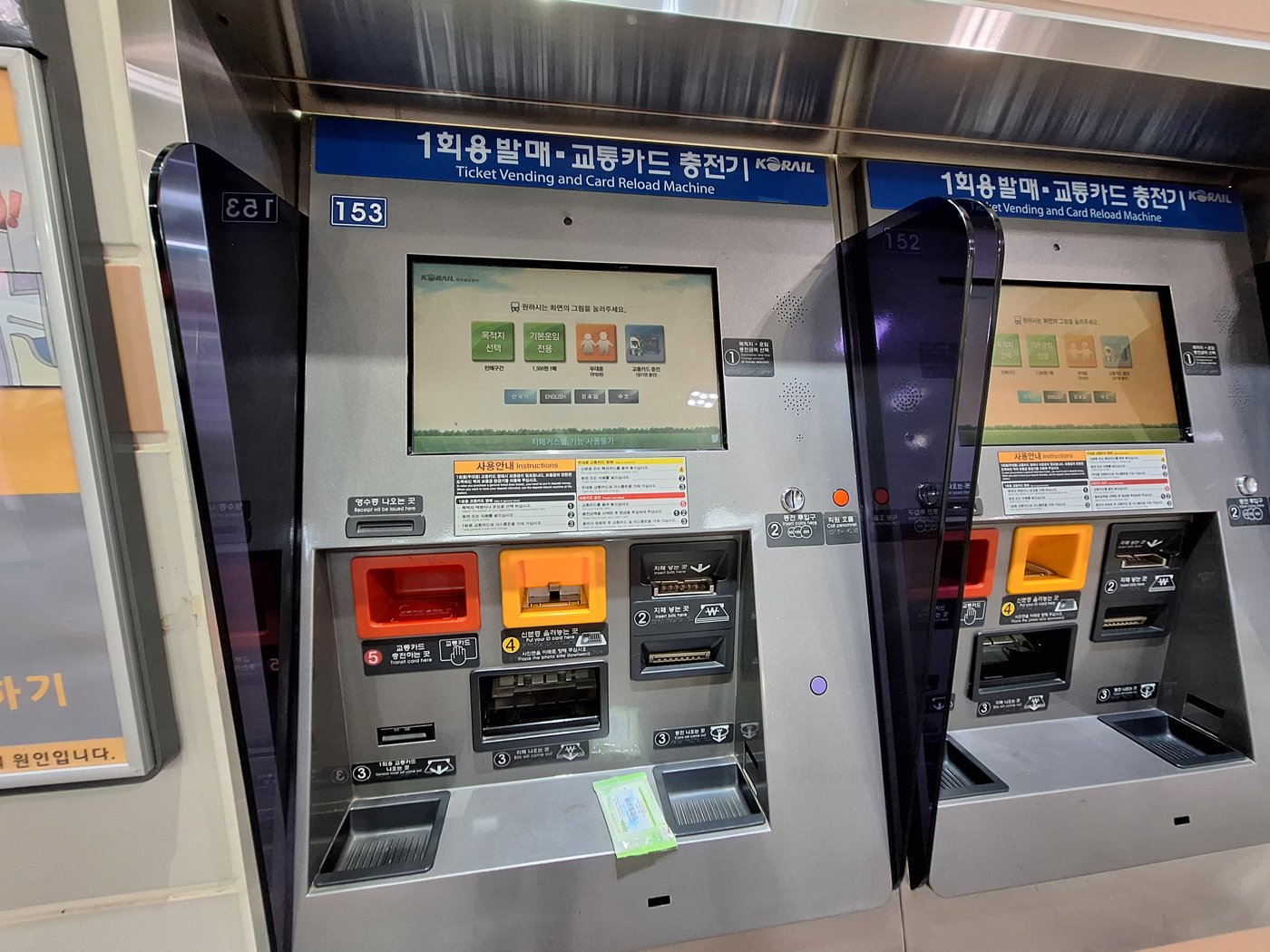
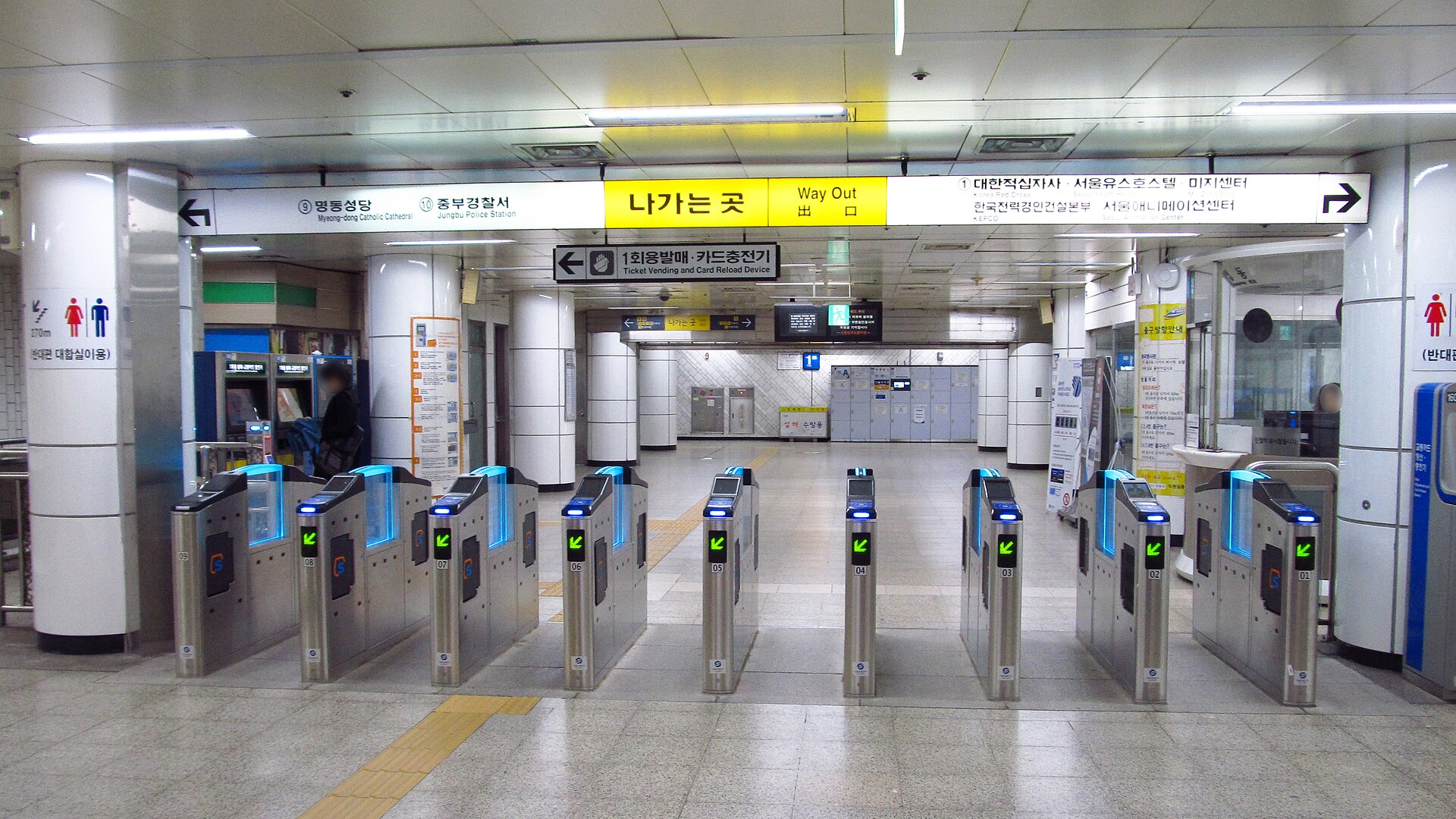
Look at the blue sign on top. Can you find the word 충전?
Show the answer
The sign says 1회용 발매 and 교통카드 충전기: single-use ticket sales and transit card top-up machine. 충전 (chung-jeon) means "charge" or "top up". It's the same word Koreans use for charging a phone.
How to top it up
- Put your card on the card spot of the machine (or hand it to the cashier at a convenience store).
- Choose 교통카드 충전 (transit card top-up). Most machines have an English button too.
- Pick an amount and insert cash. Top-ups are almost always cash only.
- Wait until the screen says it's done before you lift the card.
At a convenience store counter, this is all you need:
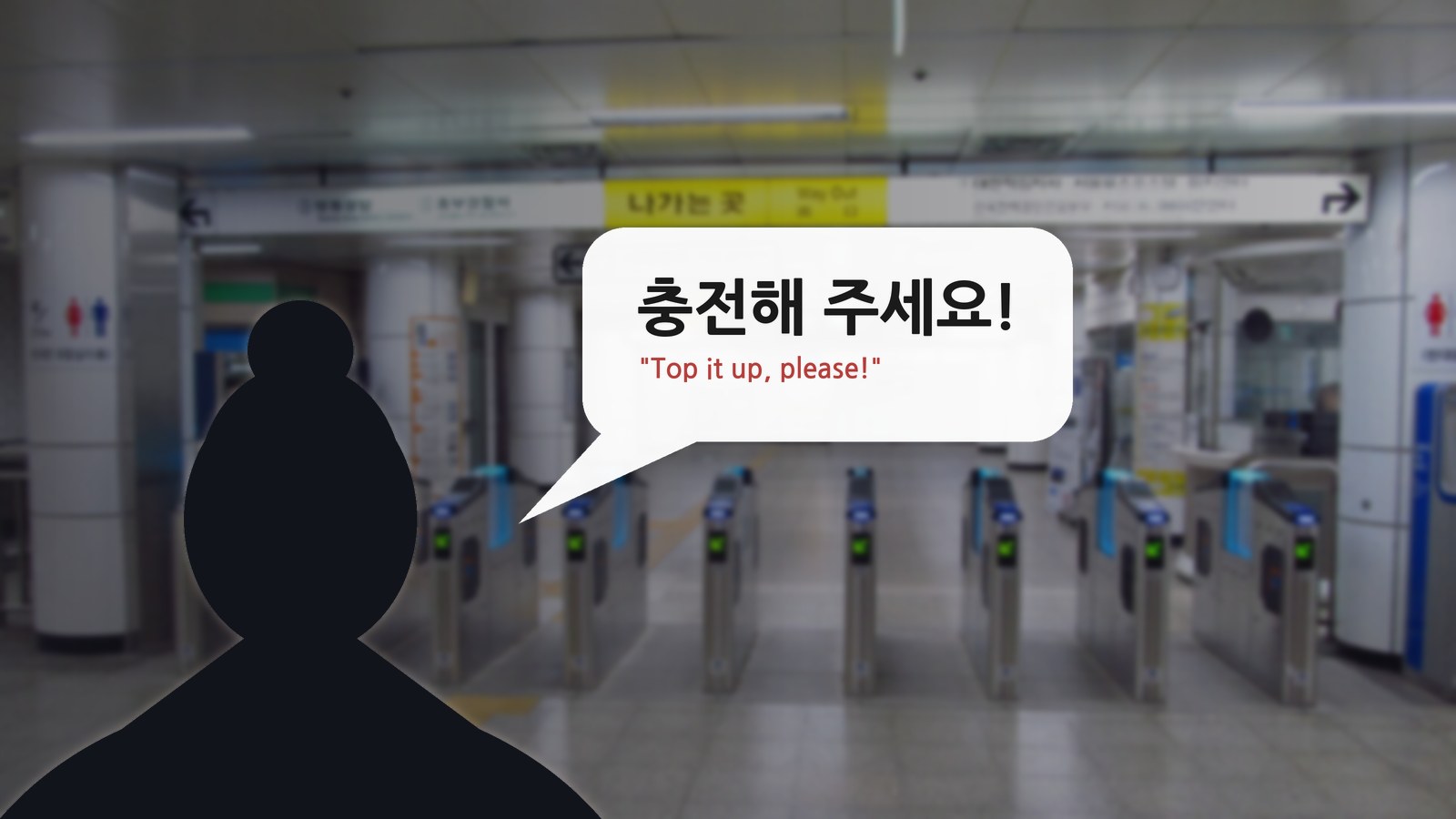
만 원 충전해 주세요.
man won chung-jeon-hae ju-se-yo "Please add 10,000 won."
The words on the gate and the bus reader
| Korean | Romanization | Meaning |
|---|---|---|
| 교통카드 | gyo-tong-ka-deu | transit card |
| 충전 | chung-jeon | top up |
| 잔액 | jan-aek | balance |
| 승차 | seung-cha | getting on |
| 하차 | ha-cha | getting off |
| 환승 | hwan-seung | transfer |
| 나가는 곳 | na-ga-neun got | way out |
And two things the gate might say out loud:
- 잔액이 부족합니다: "Not enough balance." Time to top up.
- 카드를 다시 대 주세요: "Please tap your card again."
3 mistakes first-timers make
- Not tapping out on the bus. On the subway you have to tap to get out anyway. On the bus you can just walk off, but if you skip the reader at the back door (하차), you can lose your transfer discount on the next ride.
- Keeping two cards in one wallet. If you tap a wallet with two transit cards, the reader can't tell which one to charge. Take the T-money card out.
- Trying to top up with a credit card. Top-ups are cash in almost every machine and store. Keep a 10,000 won bill handy.
Mini quiz
1. The gate says 잔액이 부족합니다. What do you do?
Top up! 잔액 is your balance, and it isn't enough for this ride.
2. You're getting off the bus. Which word is on the back door reader?
하차 (ha-cha), getting off. 승차 is getting on.
3. How do you say "20,000 won"?
이만 원 (i-man won). Two units of 10,000.
Why reading beats memorizing here
You could memorize "the green button on the left", but the machines change from station to station. If you can read 충전 and 잔액, every machine in Korea makes sense. That's the whole idea behind my 7-day workbook: learn the 40 letters once, and you can sound out any sign you meet.
Not sure where to go first? This is the guide I made for friends, with the station and exit for all 30 places:
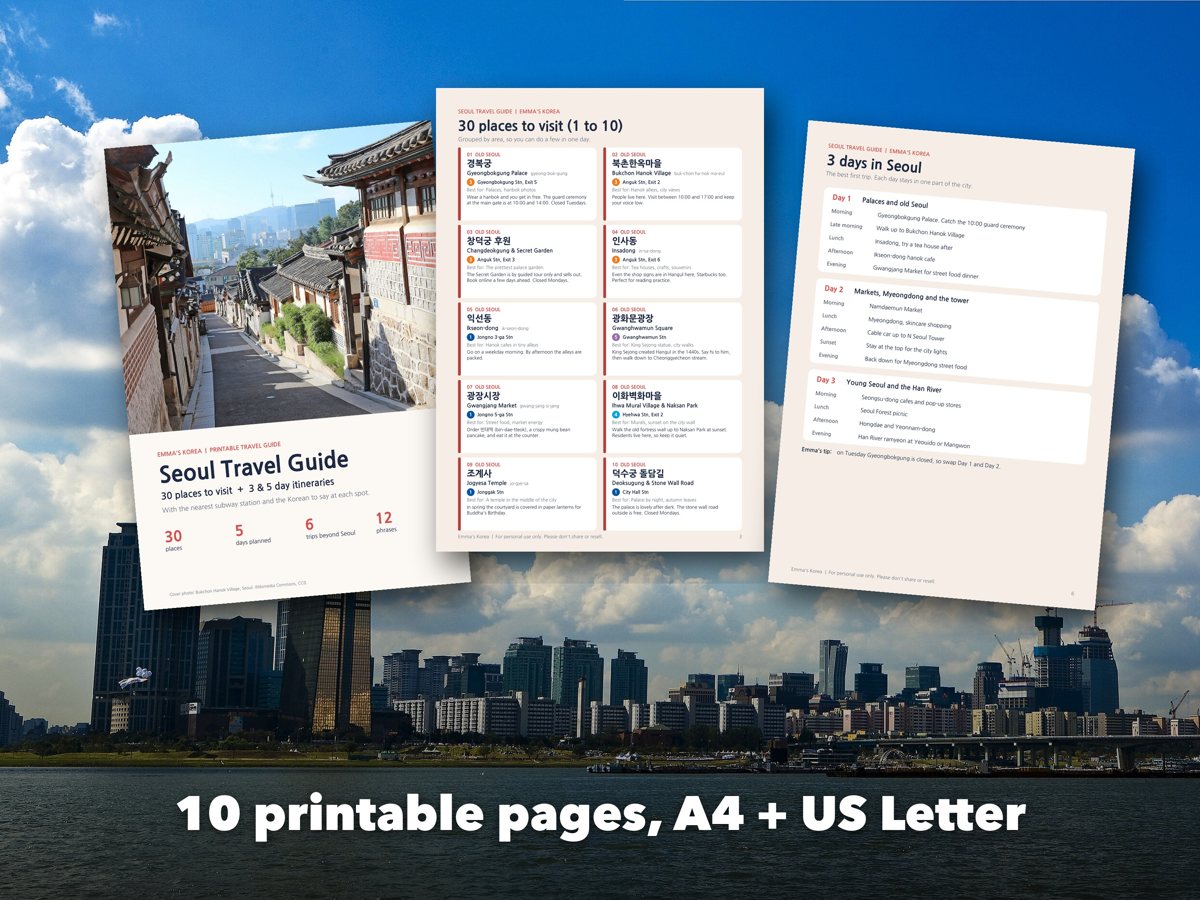
Printable on Etsy
Printable Seoul Travel Guide
All 30 places with the nearest station and exit, 3 and 5 day itineraries, 6 day trips and the Korean to say at each stop. 10 pages, A4 and US Letter.
Get the printable guideHeading to Seoul soon? Read the 10 subway signs to know before your trip next.
Free download
The Seoul Cheat Sheet
Ten signs, eight cafe words and six travel phrases on two printable pages. Tell me where to send it.
From the author
Learn to Read Korean in 7 Days
A printable, step-by-step workbook that takes you from your very first letter to reading a real cafe menu and Seoul signs. Numbered stroke order, a memory trick for every letter, and real words from Day 1.
See the workbookEmma is a Korean-American who grew up in the US and now lives in Seoul. A marketer by trade, she spent years guiding first-time visitors around Korea and teaching them to read Hangul.