How to Say Hello in Korean (and Goodbye, Which Is Trickier)
안녕하세요 is just the start. Learn the hello you'll use every day, the casual one for friends, the two different goodbyes, and how to answer the phone, with audio.
Here's the good news: Korean has one hello that works with almost everyone, all day long. No "good morning" versus "good evening" to worry about. Here's the surprise: there are two different ways to say goodbye, and which one you use depends on who is leaving.
The hello you'll use every day
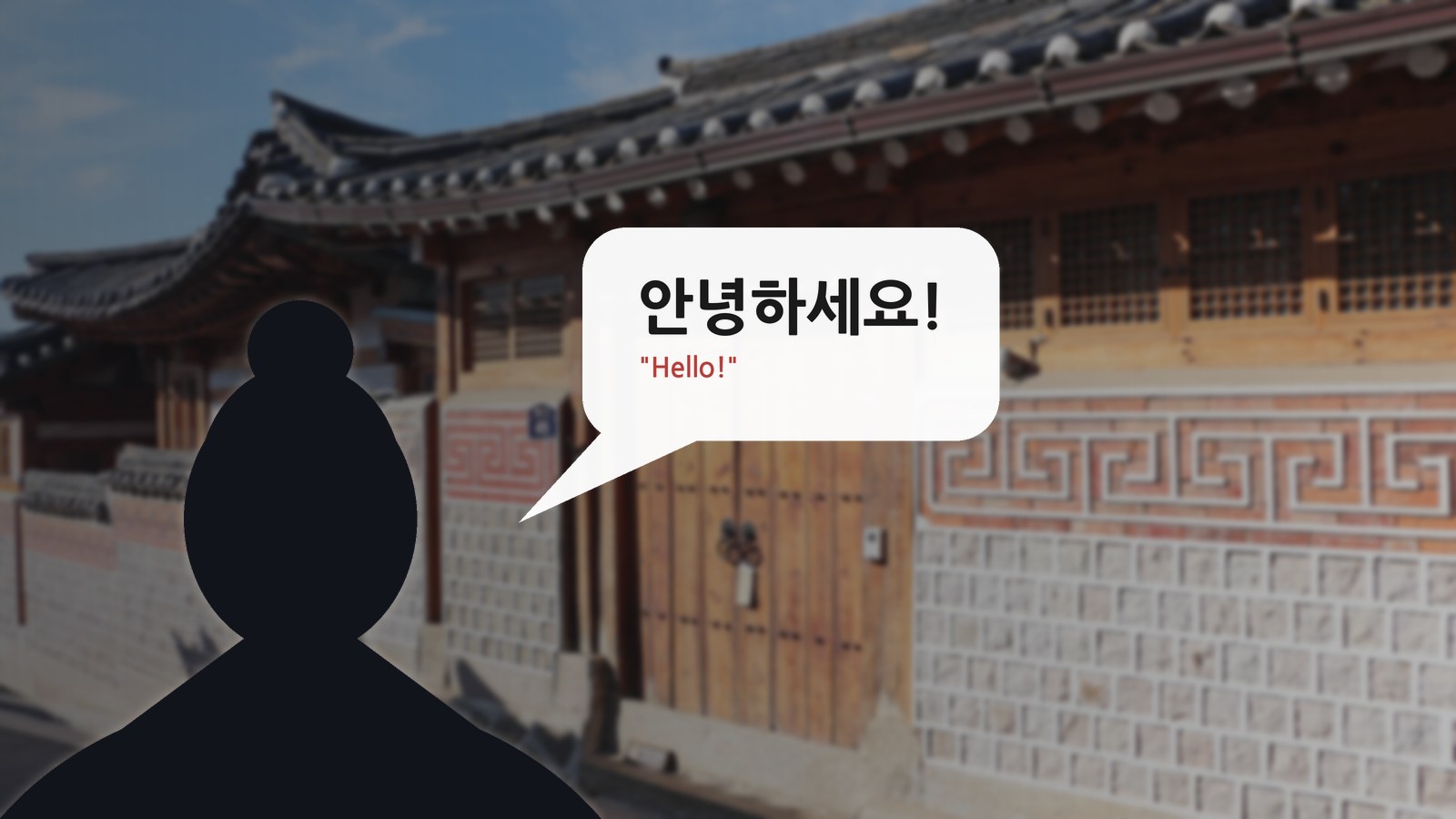
안녕하세요.
an-nyeong-ha-se-yo "Hello." (polite, works almost everywhere)
Say it walking into a shop, to your guesthouse host, to the taxi driver, to an older person you've just met. It literally means something like "are you at peace?", which is why it works at any time of day.
The casual hello for friends
안녕!
an-nyeong "Hi!" / "Bye!" (friends and kids only)
안녕 means both hi and bye, but only use it with close friends, people younger than you, or kids. With a shop owner it sounds a bit too casual.
Goodbye: who is leaving?
This is the part textbooks make confusing, so here's the simple version.
| You say | When | Literally |
|---|---|---|
| 안녕히 가세요 | They are leaving | "Go in peace" |
| 안녕히 계세요 | You are leaving, they stay | "Stay in peace" |
Leaving a cafe? The staff are staying, so you say 안녕히 계세요. And they'll say 안녕히 가세요 to you.
안녕히 가세요.
an-nyeong-hi ga-se-yo "Goodbye." (to someone who is leaving)
안녕히 계세요.
an-nyeong-hi gye-se-yo "Goodbye." (when you are the one leaving)
Honestly? If you mix them up, nobody will mind. And when you're not sure, 감사합니다 on the way out works too. (Here's more on that one.)
Meeting someone for the first time
처음 뵙겠습니다.
cheo-eum boep-get-seum-ni-da "Nice to meet you." (very polite, first meeting)
반갑습니다.
ban-gap-seum-ni-da "Good to see you." / "Nice to meet you."
반갑습니다 is the friendlier of the two, and you can say it to anyone you're happy to see, not just on the first meeting.
Answering the phone
여보세요?
yeo-bo-se-yo? "Hello?" (phone only)
You'll hear this one in every K-drama. It's only for the phone, so don't use it to greet someone in person.
Can you read it?
Here's something fun. 안녕하세요 is five blocks, and each block is just a few letters put together:
| Block | Letters | Sound |
|---|---|---|
| 안 | ㅇ + ㅏ + ㄴ | an |
| 녕 | ㄴ + ㅕ + ㅇ | nyeong |
| 하 | ㅎ + ㅏ | ha |
| 세 | ㅅ + ㅔ | se |
| 요 | ㅇ + ㅛ | yo |
Notice ㅇ shows up twice? At the start of a block it's silent, and at the bottom it sounds like "ng". Once you know about 40 letters like these, you can sound out any Korean word. That's exactly what my workbook teaches, one day at a time.
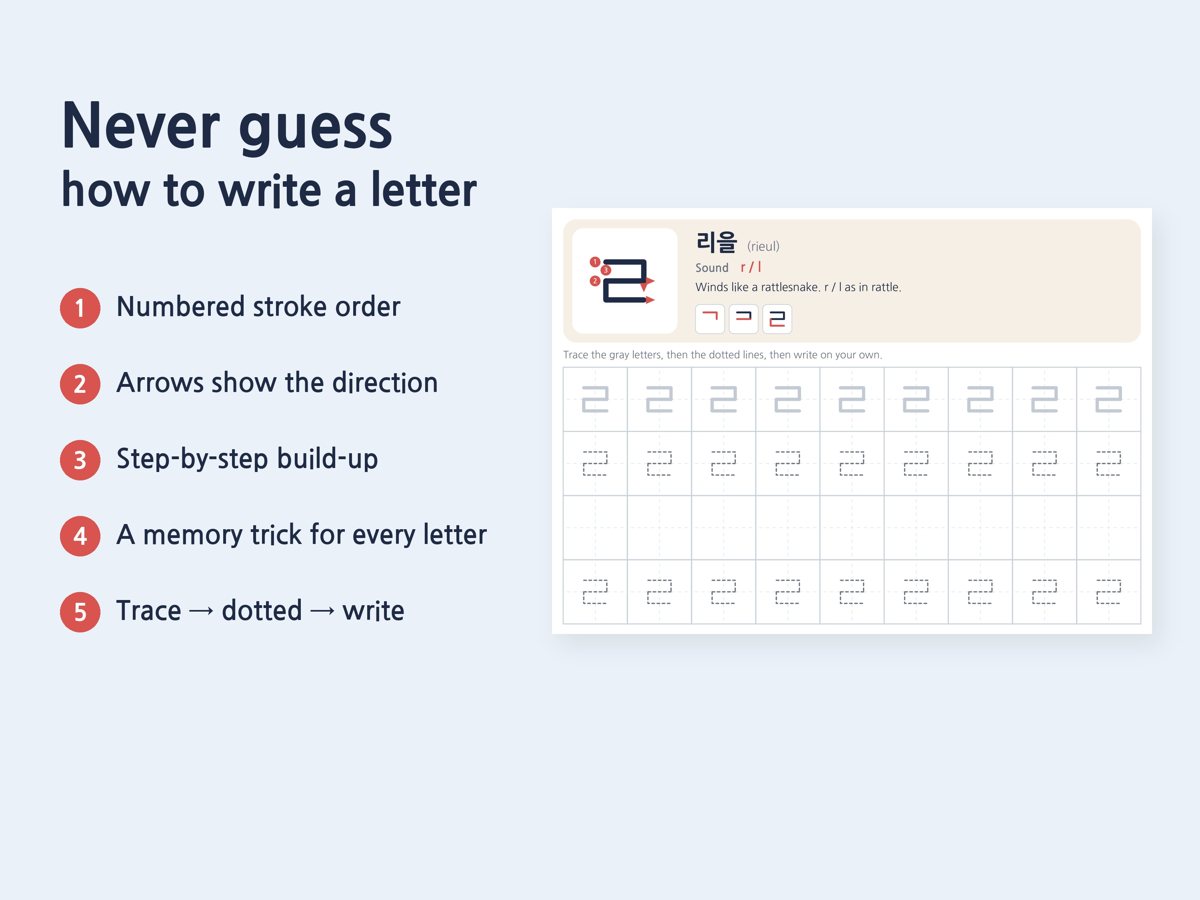
Printable on Etsy
Day 1 to Day 7, on paper
This is a page from my workbook. Every letter gets numbered stroke order and space to practice, so it actually sticks.
See the full workbookMini quiz
1. You're leaving your guesthouse. The host stays. What do you say?
안녕히 계세요. You're leaving, they're staying.
2. Your Korean friend's little sister waves at you. What do you say?
안녕! Casual is perfect with kids.
3. Your phone rings. What do you say?
여보세요?
Ready for the next step? Learn how to read the alphabet itself, starting with the 5 easiest letters.
Free download
The Seoul Cheat Sheet
Ten signs, eight cafe words and six travel phrases on two printable pages. Tell me where to send it.
From the author
Learn to Read Korean in 7 Days
A printable, step-by-step workbook that takes you from your very first letter to reading a real cafe menu and Seoul signs. Numbered stroke order, a memory trick for every letter, and real words from Day 1.
See the workbookEmma is a Korean-American who grew up in the US and now lives in Seoul. A marketer by trade, she spent years guiding first-time visitors around Korea and teaching them to read Hangul.